A behavior chart helps kids see and practice the behaviors you want more of. Used well, it isn’t about catching kids doing something wrong.
It’s about noticing when they get it right, as often as possible.
These 10 printable behavior charts for kids at home are all built on positive reinforcement: praising and rewarding the behavior you want to see!
Before You Start a Behavior Chart
- Choose one or two behaviors. Too many goals at once makes it hard for kids to succeed.
- Describe the behavior you want, not the one you don’t. “Use gentle hands” instead of “no hitting.” “Use a calm voice” instead of “stop yelling.”
- Make it specific enough to see. “Be good” is hard to measure. “Get dressed before breakfast” isn’t.
- Keep it achievable. Set the first goal so your child can succeed most days, then raise it.
- Pair every mark with specific praise, like “You shared your blocks with your sister without being asked.”
1. Daily Behavior Chart
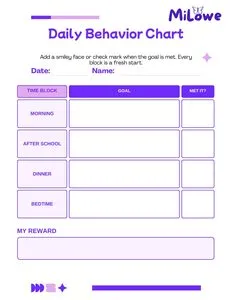
The day is broken into blocks, like morning, after school, dinner, and bedtime. For each block, your child gets a smiley face or check mark if they met the goal. Short time blocks give kids a fresh start several times a day, so one hard morning doesn’t ruin the whole day.
Best for: ages 4 to 10, working on one behavior that comes up throughout the day.
2. Positive Behavior Chart
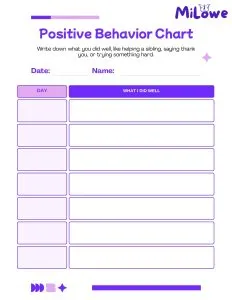
A blank chart with space to write down specific things your child did well, like helping a sibling, saying thank you, or trying something hard. There’s no pass or fail. You’re just collecting wins. Reading the list back together at bedtime is a nice way to end the day.
Best for: kids who have been hearing a lot of no lately and need to hear more about what they’re doing right.
3. One-Skill Behavior Chart
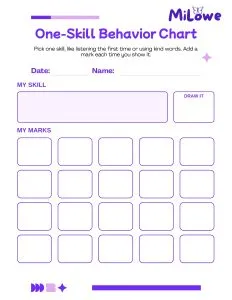
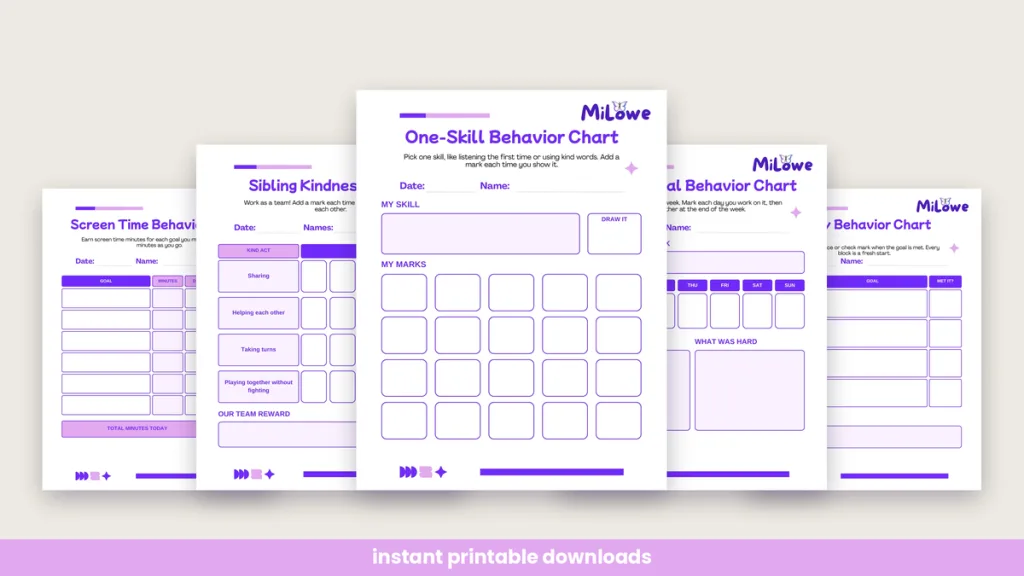
A chart focused on a single skill, like listening the first time, keeping hands to yourself, or using kind words. The skill is written at the top with a simple picture, and kids earn a mark each time they show it.
Best for: younger kids, and any child who gets overwhelmed by a chart with too many goals.
4. Behavior Chart with Points and a Reward Menu
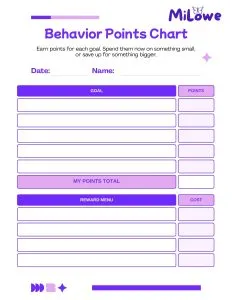
Each goal is worth points, and points can be traded for rewards from a menu at the bottom of the chart. Kids decide whether to spend their points right away on something small or save up for something bigger.
Best for: ages 7 and up who respond well to having choices.
5. Calm-Down Behavior Chart
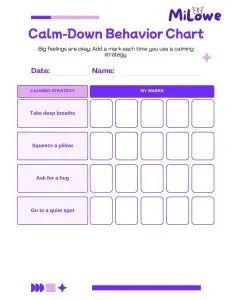
This chart tracks the use of calming strategies, not the absence of big feelings. It lists a few options, like taking deep breaths, squeezing a pillow, asking for a hug, or going to a quiet spot, and kids earn a mark when they use one. Big feelings are normal. The goal is building ways to handle them.
Best for: kids working on handling frustration or anger.
6. Sibling Kindness Chart
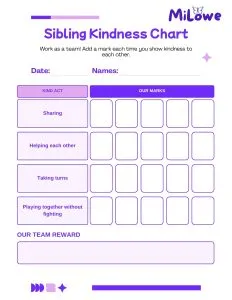
A shared chart where siblings earn marks for being kind to each other, like sharing, helping, taking turns, or playing together without fighting.
Marks can go toward a shared reward, so siblings are working as a team instead of competing.
Best for: families with siblings who argue often.
7. Screen Time Behavior Chart
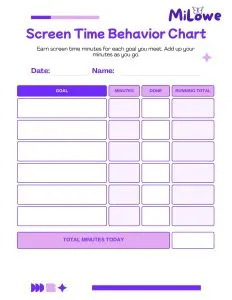
Kids earn screen time minutes by meeting goals like finishing homework, completing chores, or following the morning routine. The chart shows how many minutes each goal is worth and keeps a running total for the day.
Best for: families who want a clear, predictable way to handle screen time instead of negotiating it every day.
8. Weekly Goal Behavior Chart
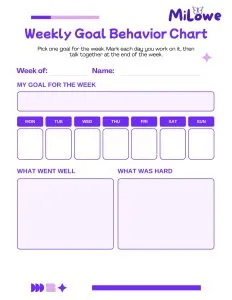
One goal for the whole week, with a space for each day. At the end of the week, you and your child look at the chart together and talk about what went well and what was hard.
Best for: school-age kids who are ready to reflect on their own progress.
9. School Day Behavior Chart
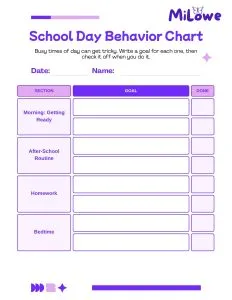
Built around the school day, with sections for getting ready in the morning, the after-school routine, homework, and bedtime. It focuses on the rushed transition times when behavior tends to fall apart.
Best for: kids ages 5 to 12 during the school year.
10. Behavior Contract for Tweens and Teens
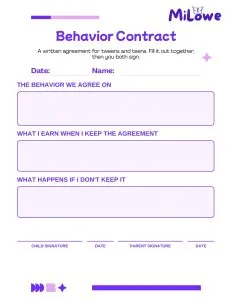
Instead of stickers, older kids get a written agreement. It lists the expected behavior, what they earn for following it, like a later curfew or more phone time, and what happens if the agreement isn’t kept. You and your child both sign it.
Best for: ages 11 and up who want more say in the rules. Writing the contract together gives them a sense of ownership.
How to Use a Behavior Chart Consistently
- Check the chart at the same times every day.
- Mark progress right away when you can, especially for younger kids.
- Don’t take away marks that were already earned. Handle misbehavior separately.
- Review the chart once a week and adjust any goal that is too easy or too hard.
- Phase out the chart once the behavior becomes a habit, and keep praising it.
If a behavior chart isn’t helping after a few weeks, the goal may be too hard, the reward may not matter to your child, or something else may be behind the behavior.
If you’re worried about ongoing behavior at home or school, your child’s pediatrician is a good place to start.